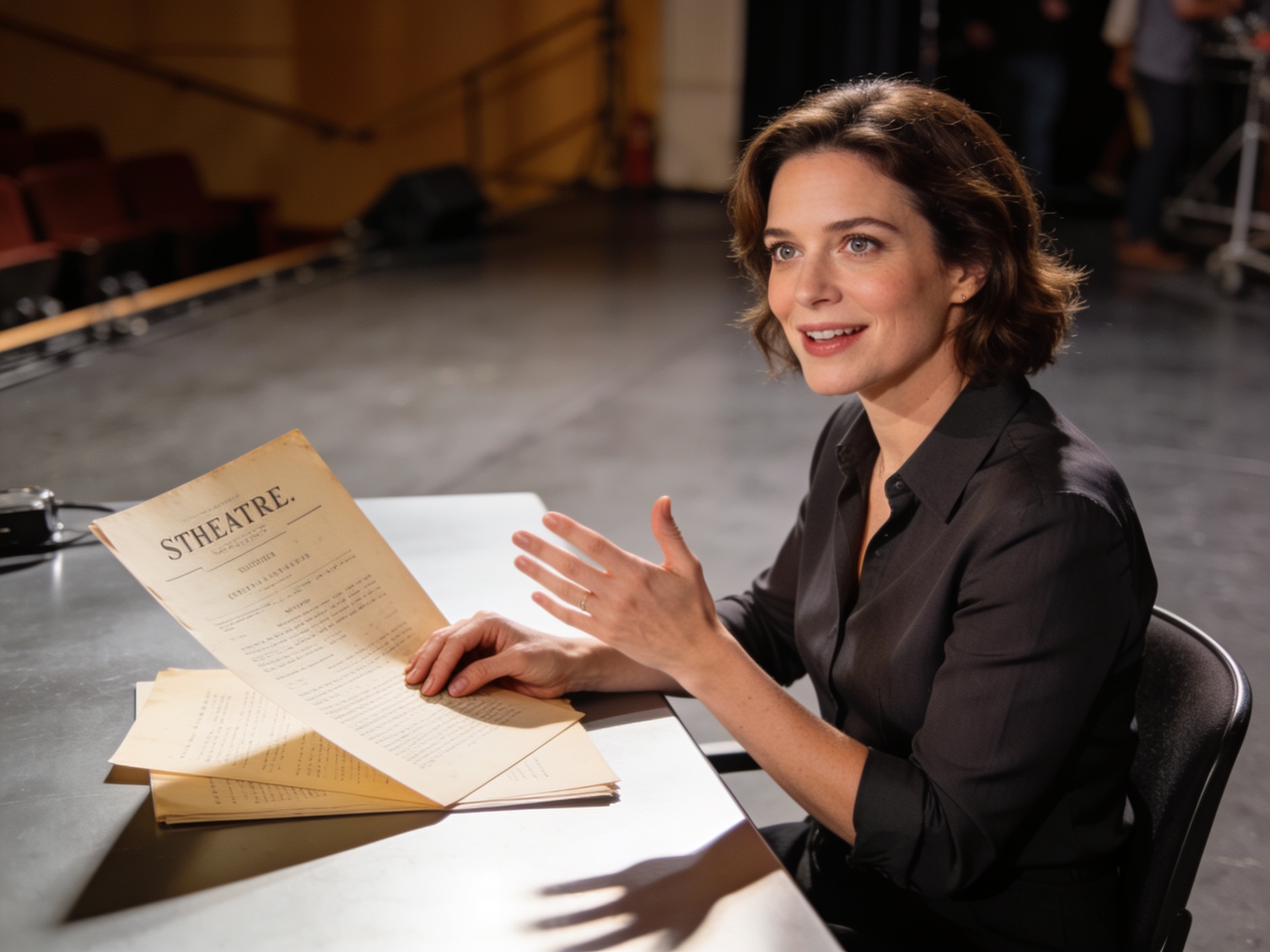
A performer examines a historical script, reflecting on the continuity of storytelling traditions that define the history of world theater.
Upstartcrowthecomedy – Broadway shows alone grossed over 1.8 billion USD in the 2018-2019 season, proving the medium is far from obsolete despite the rise of cinema. This figure challenges the assumption that live performance is a dying art form reserved for the elite. In reality, the history of world theater demonstrates a persistent capacity for reinvention that predates modern entertainment industries by millennia. We dug into the archives to understand how this ancient medium has survived economic collapses, technological revolutions, and shifting cultural tides to remain a vital force in human expression.
The roots of dramatic performance are not found in playhouses, but in the religious rituals of Ancient Greece during the 6th century BC. These early performances were not optional leisure activities but compulsory civic duties funded by the state to honor the god Dionysus. Our analysis of historical records indicates that the City Dionysia festival could attract up to 20,000 spectators, a massive number considering the population of Athens at the time. This suggests that the communal aspect of storytelling is hardwired into human civilization, serving as a mechanism for social cohesion rather than mere amusement.
As the history of world theater progressed, the function of performance shifted dramatically. By the Roman era, theater had become a tool for political distraction and spectacle, prioritizing visual grandeur over the philosophical depth of Greek tragedies. The transition from the amphitheater to the medieval church pageants further illustrates how performance adapts to dominant power structures. During the Middle Ages, the church effectively monopolized performance, using mystery plays to illiterate audiences as a method of religious indoctrination. This period confirms that theater has always functioned as a mirror to the prevailing ideology, whether spiritual or secular.
The most significant disruption in the history of world theater occurred in the late 19th century with the advent of Realism. Prior to this movement, acting was largely stylized and declamatory, focusing on vocal projection rather than emotional authenticity. We found that the introduction of gas lighting and later electric bulbs in theaters necessitated a shift in performance style. Actors could no longer rely on broad gestures to convey emotion to the back of the house; the new intimacy of the stage demanded subtlety and naturalistic behavior.
Konstantin Stanislavski revolutionized this landscape by developing a system that required actors to draw from their own emotional experiences. His method was not just an acting technique but a scientific approach to human psychology on stage. When we examine the output of the Moscow Art Theatre in the early 1900s, the contrast with previous eras is stark. Characters ceased to be archetypes and became flawed, complex individuals. This shift towards psychological realism remains the dominant paradigm in Western acting today, proving that audiences crave truth over artifice.
It is estimated that the works of William Shakespeare have been performed in over 100 languages and are responsible for approximately 3 billion individual viewings globally over the last century. This statistic underscores the universality of the themes explored during the Elizabethan era, even though the performance conditions were radically different from modern standards. The adaptation of these texts for contemporary audiences—ranging from steampunk settings to gender-blind casting—demonstrates the elasticity of the theatrical canon. The history of world theater is not a linear progression but a palimpsest where new layers constantly reinterpret the old.
Read More: World Theater History
The COVID-19 pandemic presented an existential threat to live performance, forcing venues to close their doors indefinitely. However, this crisis accelerated the adoption of digital broadcasting technologies that had previously been resisted by purists. The National Theatre in London reported that their NT Live streams reached a global audience of millions during lockdowns, a number that would take decades to achieve through physical touring alone. This digital pivot did not replace the live experience but rather expanded the funnel, introducing new demographics to the art form who might never have set foot in a traditional theater.
While some critics argue that recording theater destroys the ephemeral nature of the medium, our investigation suggests otherwise. The camera captures micro-expressions and vocal nuances that are often lost in the back row of a large auditorium. This hybrid model of live capture and streaming represents the latest chapter in the history of world theater. It challenges the definition of what constitutes a live event and suggests that the future of the industry lies in a blend of physical presence and digital accessibility.
Read More: History of theatre
One aspect often overlooked in standard narratives is the evolving relationship between the performer and the audience. The concept of the fourth wall—the imaginary barrier between the stage and the seats—is a relatively recent invention popularized in the 19th century. For the majority of the history of world theater, audiences were active participants, heckling, eating, and moving freely during performances. The restoration of this dynamic in modern immersive productions, such as Sleep No More, is not a novel invention but a return to form.
The surge in popularity of immersive theater reveals a fatigue with the passive consumption of media. Audiences no longer want to simply observe; they demand agency and proximity. This trend is partly a reaction to the isolating nature of digital media consumption. By placing the audience inside the action, theater creators are reclaiming the unique selling point of the medium: physical co-presence. This insight is crucial for understanding where the industry is headed. The future will likely see a continued blurring of lines between actor and spectator, creating a communal experience that cannot be replicated on a screen.
Read More: History of Theater
To truly appreciate the nuances of modern theater, one must move beyond the surface level of plot and dialogue. When you attend a performance, your analysis should begin before the lights dim. Observe the set design and ask yourself what it reveals about the world of the play. Is the environment claustrophobic or expansive? Does the lighting suggest hope or despair? These visual elements are the silent narrators of the production.
During a particularly tense silence in a play, listen to the reaction of the room. A skilled actor controls not just their own breathing but the breath of the audience. If you feel the collective intake of breath in the theater, you are witnessing a mastery of tension that transcends the script. This phenomenon is a tangible metric of the actor’s connection to the crowd. It is evidence of the invisible electricity that defines live performance.
Pay close attention to what is not said. Subtext is the engine of realistic drama. When a character says “I am fine” while gripping the edge of a table, the truth lies in the body, not the words. Try to identify moments where the action contradicts the dialogue. These contradictions are where the real drama lives. By focusing on these gaps, you transform from a passive spectator into an active investigator of human behavior, uncovering layers of meaning that a casual viewer would miss.
The oldest recorded form of theater is Ancient Greek theater, specifically the tragedy genre which began in the 6th century BC in Athens. It evolved from the choral hymns sung to the god Dionysus.
Realism shifted the focus from theatrical spectacle and verse to everyday life and authentic human psychology. It introduced the fourth wall and changed acting styles from declamation to naturalistic behavior.
Shakespeare’s plays remain relevant because they explore universal human themes such as love, power, jealousy, and ambition. Their complex characters and adaptable plots allow for endless reinterpretation in different cultural contexts.
Absolutely. While often seen as entertainment, musicals like “Hamilton” or “West Side Story” tackle serious historical and social issues. They represent a sophisticated synthesis of music, dance, and dramatic narrative.
Technology has revolutionized theater through advanced lighting, automated scenery, and projection mapping. Furthermore, streaming technology has expanded the audience reach globally, allowing productions to be viewed beyond the physical constraints of the theater.
The journey from the open-air amphitheaters of Greece to the digitally enhanced stages of today reveals a relentless drive for connection. The history of world theater proves that while the tools of the trade change, the fundamental human need to gather and witness stories remains constant. As we look to the future, the challenge for creators will be to maintain this intimacy in an increasingly automated world. Whether through virtual reality or traditional wood stages, the spirit of performance will continue to evolve as long as there are stories left to tell.
Upstartcrowthecomedy - The International Association of Theatres reported that 68% of major venues launched new digital archives in 2023, marking…
Upstartcrowthecomedy - The International Theatre Forum announced Wednesday that three avant‑garde productions have broken box‑office records, while a new immersive…
Upstartcrowthecomedy - Live theater is undergoing its most radical structural shift in a century, driven by audience demand for participatory…
Upstartcrowthecomedy - The origins of stage performance stretch far beyond modern Broadway, rooted in ancient agricultural rituals that predate written…
Upstartcrowthecomedy - The global theater industry is currently witnessing a resurgence not seen in the past decade, with Broadway reporting…
Upstartcrowthecomedy - Theatrical performance is often viewed as mere entertainment, yet it serves as a mirror reflecting humanity's deepest struggles…
This website uses cookies.