UpStart Crow – Theatre makers across the world now rely on theatre digital innovation facts to understand how new tools reshape performance, design, and audience experience on modern stages.
Digital tools no longer sit at the edge of performance; they live at its center. Directors, designers, and producers use projection mapping, immersive sound, and motion tracking to expand what is possible inside black box spaces and grand prosceniums alike. These changes affect rehearsal rooms, ticketing systems, and even how audiences talk about shows online.
Several theatre digital innovation facts stand out. First, digital technologies do not replace actors; they extend their presence. Second, many companies adopt hybrid workflows where analog craft and software coexist. Third, audiences tend to accept technology when it supports storytelling rather than distracts from it.
Because of this, companies large and small test new tools step by step. They may start with simple digital sound cues, then add projected backdrops, and only later move toward interactive or immersive systems. Each stage of experimentation reveals more theatre digital innovation facts about budgets, training needs, and the limits of specific venues.
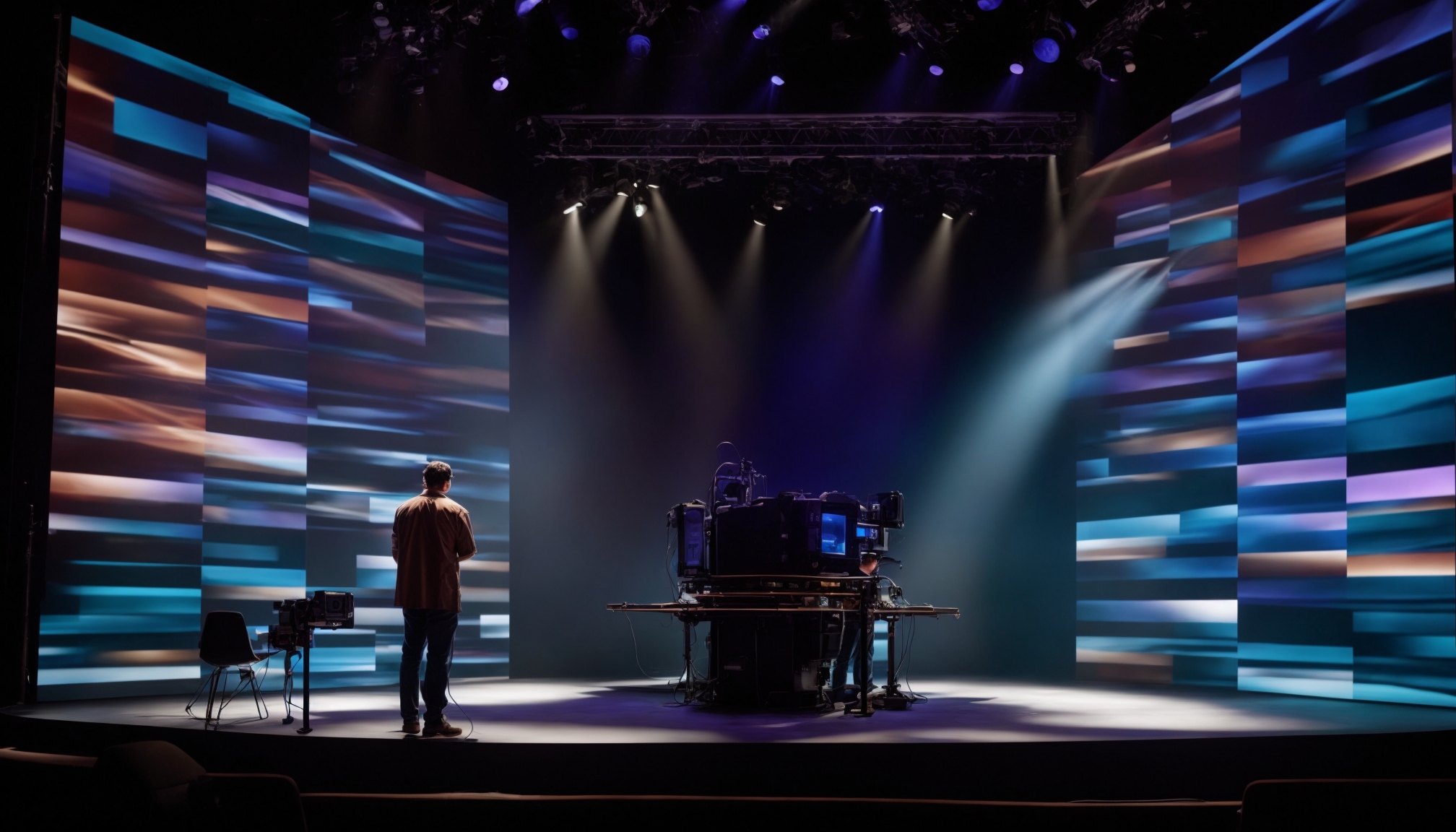
One of the clearest theatre digital innovation facts involves the rise of virtual scenography. High‑resolution projectors and LED walls allow designers to shift locations in seconds, moving from a city street to a distant planet through light and color alone. Instead of building heavy flats, teams construct digital environments that respond quickly to direction changes.
This approach can reduce storage needs and long build schedules. However, it demands new skills. Designers must understand rendering, file formats, and how media servers talk to lighting desks. Stage managers also track cues with more precision, since a mistimed projection snap can break an illusion or disorient performers.
On the other hand, virtual sets encourage more sustainable practice. Reusing digital assets across productions cuts material waste and transport emissions. Many companies now keep digital libraries of skies, streets, and abstract textures that they can adapt in future seasons without additional lumber or paint.
Sound design offers another cluster of theatre digital innovation facts. Surround systems and object‑based audio let designers move a whisper around a room or simulate a storm rolling overhead. The goal is not just loudness but precision: to guide audience attention and deepen emotional impact.
Meanwhile, motion sensors and tracking systems can link actor movement to visual or musical changes. A performer’s gesture may trigger a burst of light, or a chorus crossing the stage may cause the projected environment to ripple. When used carefully, these tools make the stage feel alive and responsive.
However, interactive designs require robust testing. Glitches, latency, and unreliable wireless signals can undermine performances. Because of this, many teams maintain analog backups, such as manual light cues or pre‑rendered audio, in case live systems fail during a run.
Baca Juga: Sejarah dan perkembangan desain panggung teater modern
Many of the most important theatre digital innovation facts involve audiences rather than backstage work. Mobile ticketing, QR‑based programs, and dynamic seating charts help people move into venues with less friction. Digital marketing campaigns on social platforms connect productions to new communities and younger demographics.
During the pandemic years, many companies experimented with livestreamed or on‑demand performances. That period revealed practical theatre digital innovation facts about cameras, encoding, and the willingness of audiences to pay for online access. Even after venues reopened, some theatres kept hybrid models to reach viewers who cannot travel.
There is also growth in companion apps and second‑screen content. These tools may provide behind‑the‑scenes videos, dramaturgical notes, or accessibility options such as captions and audio description. When well designed, they support the show without asking viewers to stare at phones during key moments.
Artificial intelligence now enters workflows in subtle ways. Some playwrights use language models to brainstorm character backstories. Lighting designers run simulations to test cue sequences. Producers apply data analysis to understand ticket sales patterns and forecast demand.
These tools do not remove human judgment. Instead, they widen the number of choices available in pre‑production. Many theatre professionals share theatre digital innovation facts in workshops and conferences, comparing how AI, automation, and cloud‑based collaboration platforms influence creative decisions.
Ethical questions remain important. Artists debate how to credit algorithmic contributions, how to protect performers’ likenesses, and how to prevent bias in casting or marketing tools. Transparent policies and open conversations help companies move forward without losing trust.
Across these developments, one theme repeats: technology must serve the story. Directors regularly return to core theatre digital innovation facts when planning seasons and budgets. They ask whether a tool clarifies character, deepens emotion, or strengthens connection between performers and audiences.
Because theatre is a live art form, its power still depends on presence, timing, and shared attention. Digital tools can amplify those qualities when used with care. They can also overwhelm them if deployed as spectacle for its own sake. Teams that understand key theatre digital innovation facts stand a better chance of finding the right balance.
As more students train on both sewing machines and media servers, analogue drafting tables and 3D modeling software, future stages will likely feel even more fluid and responsive. By grounding experiments in clear theatre digital innovation facts, the industry can protect what makes performance unique while welcoming new ways to imagine worlds under the lights.
This website uses cookies.