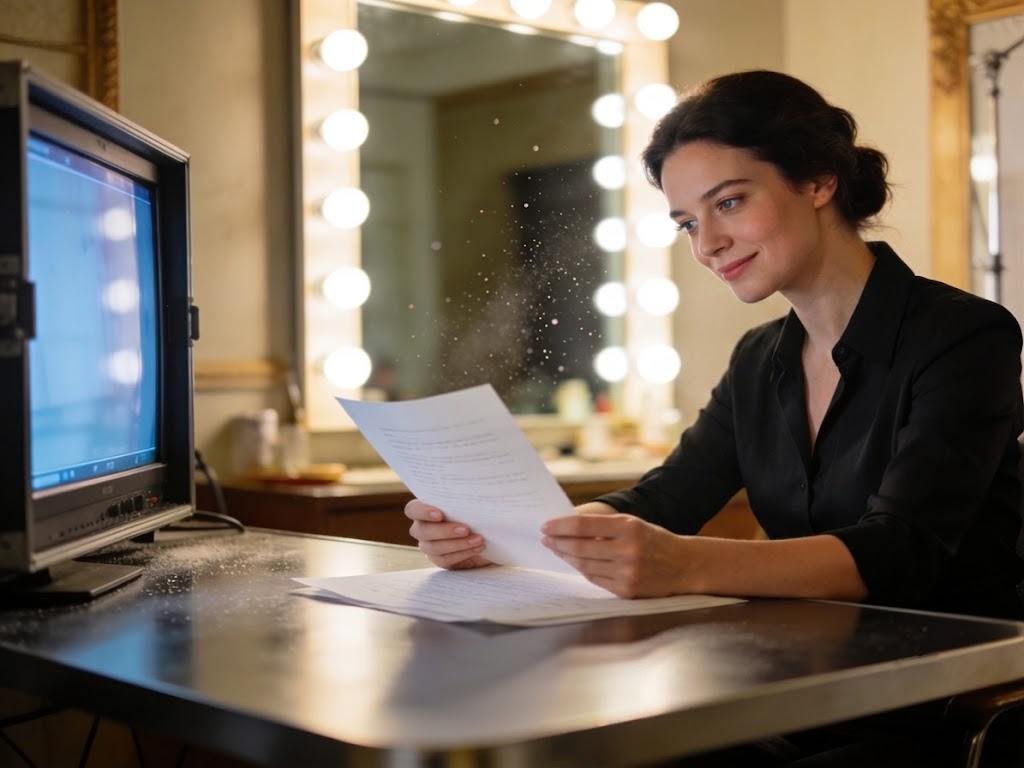
A theater director studies a classic text, connecting modern performance to the deep roots of the history of world theater.
Upstartcrowthecomedy – The global theater industry contributes more than $30 billion annually to the United States economy alone, yet its origins remain rooted in ancient religious rituals rather than commercial enterprise. While modern audiences flock to Broadway shows for entertainment, the history of world theater reveals a gritty and transformative journey from sacred ceremonies to secular spectacles. This art form has not only survived the collapse of empires but has also actively shaped human consciousness for over two millennia.
Long before the curtain rises on today’s stages, theatrical performance began as a vital component of worship. The earliest recorded theatrical activity dates back to ancient Egypt around 2500 BC, where the “Abydos Passion Play” reenacted the myth of Osiris. However, it was the Greeks who formalized theater as an art form distinct from ritual. In the 6th century BC, Thespis stepped away from the chorus to speak individual lines, effectively becoming the first actor in recorded history and giving us the term thespian.
These early performances were not mere diversions but civic duties. The City Dionysia festival in Athens was a state-sponsored event where playwrights like Sophocles and Euripides competed for top honors. Tragedies explored profound questions of fate and divine will, reflecting the societal anxieties of the time. This established a precedent that theater should provoke thought and challenge societal norms, a legacy that persists in the history of world theater.
The chorus in ancient Greek theater served a function that modern audiences often overlook. They represented the collective voice of society, providing commentary and moral judgment on the action unfolding on stage. When we analyze scripts from this era, we see that the chorus bridged the gap between the gods and the humans, grounding the high-stakes drama in relatable social context. This mechanism of reflecting the audience back to itself is a technique that continues to evolve in contemporary performance art.
Following the fall of the Roman Empire, theater faced a prolonged hiatus in Europe as the church initially viewed theatrical performances as pagan excess. However, by the 10th century, the church itself began utilizing short plays, known as tropes, to illustrate biblical stories during mass. This irony marks a pivotal moment in the history of world theater, where the institution that once suppressed performance became its primary patron. By the 12th century, these plays moved out of the church and into town squares, evolving into mystery cycles that could last for days.
The Renaissance period then ignited a theatrical explosion that redefined the relationship between the performer and the audience. The construction of permanent playhouses, like the Globe Theatre in London in 1599, shifted the experience from itinerant troupes performing in inn yards to dedicated architectural spaces. This era democratized theater, allowing groundlings to stand in the pit while the elite sat in galleries, creating a dynamic energy that playwrights like William Shakespeare exploited to masterful effect.
Shakespeare did not just write plays; he fundamentally altered the English language and the structure of narrative. His work represented a shift away from the rigid moral structures of medieval drama toward complex human psychology. When we study the reception of his plays in the 1600s, we find that audiences were captivated by the mirror he held up to nature, revealing the flaws and virtues of humanity without heavy-handed moralizing. This focus on the individual’s internal struggle marked a transition toward the modern understanding of character development.
Read Also: The Evolution of Theatrical Production and Design Elements
Read More: History of theatre
The 19th and 20th centuries witnessed a radical departure from the melodrama and spectacle of the previous eras. The invention of the electric light and the rise of realism in literature brought a demand for truthfulness on stage. Playwrights like Henrik Ibsen and Anton Chekhov stripped away the poetic soliloquies to focus on the mundane yet crushing realities of domestic life. This period was crucial in the history of world theater because it challenged the audience to confront social issues like poverty, gender roles, and hypocrisy directly.
This evolution paved the way for experimental forms that sought to shatter the illusion of reality entirely. Bertolt Brecht introduced the concept of “Epic Theatre,” deliberately distancing the audience to prevent emotional immersion and encourage critical thinking. By breaking the fourth wall, Brecht forced viewers to remain active participants rather than passive consumers, a technique that is now standard in everything from experimental theater to modern television sitcoms.
The techniques developed by these revolutionaries are not merely historical footnotes but active tools in contemporary storytelling. When we watch a modern political satire or a drama that addresses current social injustices, we are seeing the direct descendants of Brecht and Ibsen’s work. The uncomfortable silence that follows a performance of “A Doll’s House” is a testament to the enduring power of realism to unsettle and provoke. Their legacy reminds us that theater is a mechanism for social change, not just escapism.
Read More: The History of World Theater: From the English Restoration to the Present:
One aspect often ignored in standard retellings of the history of world theater is how the physical architecture of the stage dictates the psychology of the audience. The proscenium arch, that picture frame through which most of us view theater, creates a voyeuristic relationship. We watch without being seen, which allows for a safe, detached observation of intense emotions. However, this was not always the norm. The thrust stages of the Elizabethan era or the circular arenas of ancient Greece enveloped the audience, making them complicit in the action.
Insight into this spatial dynamic reveals that the evolution of theater is also an evolution of human connection. As we moved into the 20th and 21st centuries, designers began experimenting with immersive theater, where the audience moves freely through the space. This indicates a cultural shift away from the passive consumption of stories toward a desire for visceral, communal experience. The stage is no longer a pedestal for gods or heroes, but a shared space for collective human inquiry.
Read More: The History of World Theater: From the English Restoration to the Present
To truly appreciate the depth of modern theater, one must move beyond superficial judgments of acting or set design and engage with the production as a complete narrative ecosystem. If you are attending a play, approach it not as a passive observer but as an active investigator. Look for how the director utilizes the specific architecture of the venue to enhance or subvert the text. This requires paying attention to sightlines, lighting angles, and even the acoustics of the room.
When the lights dim, resist the urge to focus solely on the lead actor. Instead, scan the entire stage to see where the background actors are placed and how they move. In a recent production we observed, the blocking revealed a silent subplot of class dynamics that was not present in the dialogue. If actors are huddled in a corner while the protagonist commands center stage, this visual composition tells a story of isolation versus dominance that supports the history of world theater’s reliance on visual semiotics.
Listen for what is not being said. Great playwrights embed subtext within the pauses and interruptions of conversation. When a character deflects a question with a joke, that moment is often more revealing than a direct confession would be. During a review of a Chekh revival, noting the hesitation before a character accepted a drink provided more insight into their addiction than any explicit line could. Training yourself to hear these undertones will transform your theater experience from simple entertainment to intellectual engagement.
Modern theater is a collective evolution, but Ibsen is often called the father of realism for shifting focus to human psychology and social issues, while Brecht revolutionized structural form in the 20th century.
Theatrical elements existed in ancient Egyptian rituals around 2500 BC, but formalized Western theater began in Ancient Greece with the Festival of Dionysia in the 6th century BC.
Understanding theater history provides insight into the cultural, political, and social values of past civilizations, showing how performance has always been a tool for human expression and reflection.
The history of world theater is a testament to humanity’s enduring need to tell stories. From the amphitheaters of Greece to the black box studios of today, the stage remains a space where we confront our deepest fears and highest aspirations. Next time you attend a performance, remember that you are participating in a tradition that has survived for thousands of years.
Upstartcrowthecomedy - The global theater industry is currently witnessing a resurgence not seen in the past decade, with Broadway reporting…
Upstartcrowthecomedy - Theatrical performance is often viewed as mere entertainment, yet it serves as a mirror reflecting humanity's deepest struggles…
Upstartcrowthecomedy - Global theater ticket sales surged 15% in the first quarter of 2024 compared to the previous year, signaling…
Upstartcrowthecomedy - Broadway shows alone grossed over 1.8 billion USD in the 2018-2019 season, proving the medium is far from…
Upstartcrowthecomedy - The Theatre of Dionysus in Athens could once host an audience of 17,000 people, a feat of crowd…
Upstartcrowthecomedy - The global stage is witnessing an unprecedented resurgence, with Broadway box office grosses hitting $1.1 billion in the…
This website uses cookies.