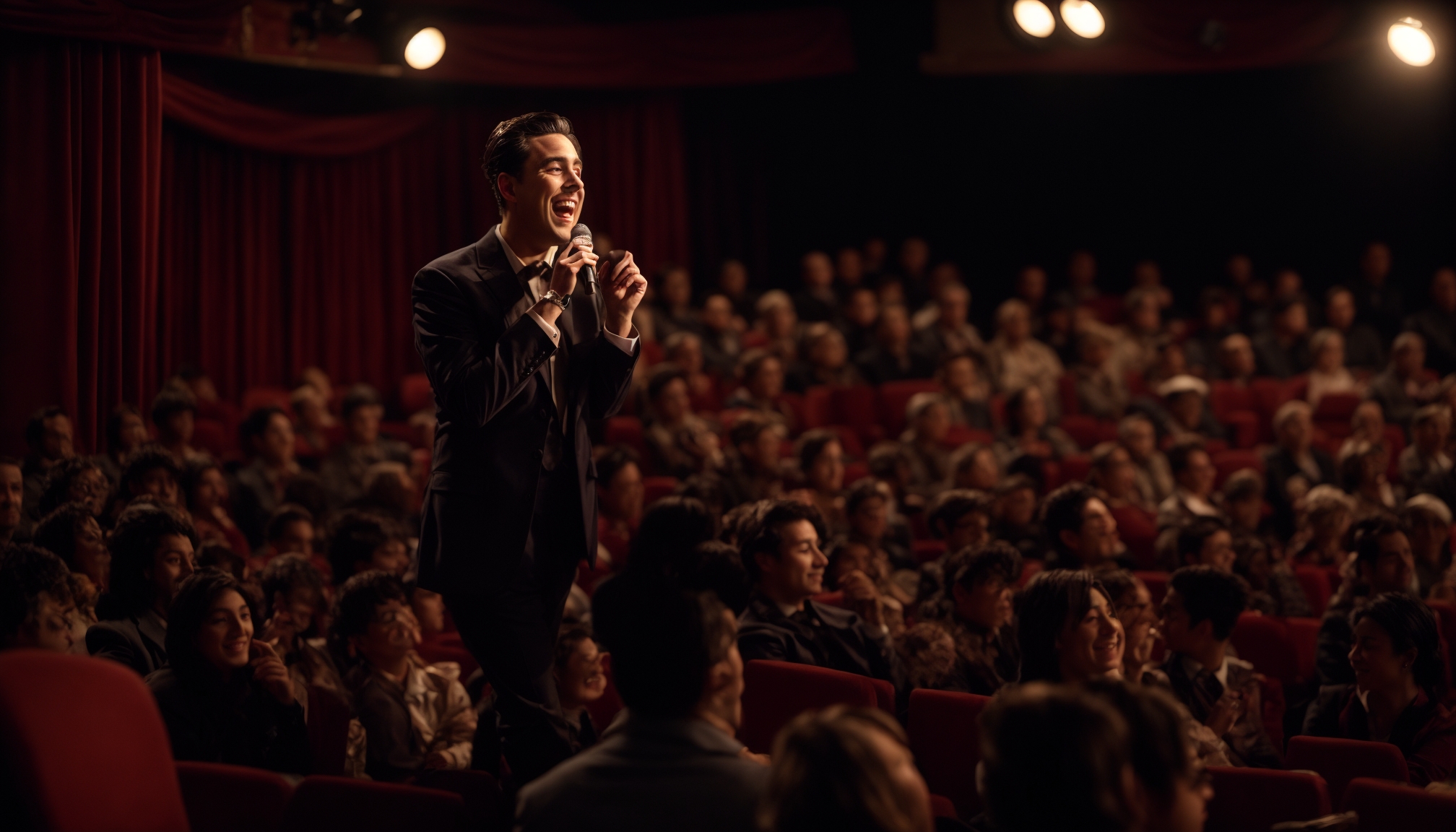
UpStart Crow – Actors depend on precise comedy timing in theatre to trigger real, contagious laughter from a live audience.
On stage, a joke lives or dies within fractions of a second. Comic actors measure silences, reactions, and movements with surgical precision. Effective comedy timing in theatre shapes how the brain processes surprise and relief. A punchline that lands too early confuses people. A punchline that lands late loses all impact.
Laughter often follows a predictable arc. First, the audience anticipates where the story seems to go. Next, a sudden twist breaks that expectation. That gap between expectation and twist creates a tiny mental jolt. Comedy timing in theatre stretches or compresses that jolt just enough to feel delightful, not chaotic.
Psychologists describe laughter as a social signal of safety. Something seems risky, then quickly proves harmless. Because of this, actors use pauses, eye contact, and rhythm to show it is safe to laugh. Carefully judged comedy timing in theatre turns a scripted line into a shared moment of release.
Neuroscience reveals that jokes activate several brain regions at once. Language centers decode the words. Emotional centers respond to surprise. Motor regions prepare the body to laugh. Well-crafted comedy timing in theatre aligns these processes in a tight sequence.
First comes set-up. The brain builds a story. Then comes the punchline that breaks the pattern. However, the brain needs a brief processing beat. A slight pause before the punchline gives the audience time to predict the “wrong” outcome. That is why comedy timing in theatre often relies on a breath, a glance, or a held gesture before the final word.
As a result, when the twist hits, the brain releases tension as laughter. If the line is rushed, the audience has not finished building the wrong expectation. If the line drags, their attention drifts. Skilled performers feel that invisible mental curve. They adjust comedy timing in theatre in real time, night after night.
Many directors compare comedy to music. Each line has tempo, stress, and rhythm. Comedy timing in theatre works like syncopation in jazz. A joke may land slightly before or after the expected beat. That micro-shift creates surprise, which fuels laughter.
Breath control also plays a major role. Actors learn where to inhale, where to hold, and where to release. On the other hand, uneven breathing can flatten a punchline. A rushed exhale may cut the final word. A delayed breath may stretch the pause too long. Carefully shaped breath supports consistent comedy timing in theatre.
Body rhythm matters too. A step forward, a turn of the head, or a dropped prop all set up physical beats. When movement and voice align, the punchline feels inevitable. When they clash, the audience hesitates. Therefore, rehearsals often focus on tightening the rhythm between lines, reactions, and physical business.
Live crowds change everything. A script may stay the same, yet laughter length, loudness, and timing shift every night. Actors listen closely and adjust comedy timing in theatre based on that feedback. They might hold after a big laugh or speed up through a quiet patch.
Acoustics also shape perception. In a small black-box theatre, actors hear every chuckle. They can respond with quick, sharp timing. In a large proscenium house, sound travels slower, and laughter swells like a wave. Because of this, performers often build in an extra heartbeat of pause to protect comedy timing in theatre from being drowned out.
Read More: The psychology of humor and why our brains love to laugh
Crowd composition matters as well. A matinee school audience laughs at different moments than an evening crowd of regular theatregoers. Nevertheless, professionals maintain flexible comedy timing in theatre, nudging the pace without losing structure. They treat the audience like a partner in a dance, not a passive observer.
Silence may be the most powerful tool in comedy. A half-second pause can turn an average line into a devastating punch. Comedy timing in theatre treats silence as active space, not dead air. During a pause, the audience fills the gap with assumptions.
A well-placed silence invites the crowd to “write” their own punchline. Then the actor delivers something slightly different. That tiny mismatch triggers laughter. If silence stretches too long, though, tension becomes awkwardness. Actors learn to count beats internally to manage comedy timing in theatre with near mathematical precision.
Subtle visual cues support those beats. A raised eyebrow, a slow turn, or direct eye contact can extend or shorten the pause. When used wisely, these tools keep silence crackling with energy instead of falling flat.
Comedy can look spontaneous, yet rigorous practice sits behind it. Acting schools now teach exercises that drill comedy timing in theatre alongside voice and movement. Students repeat short scenes, experimenting with faster and slower deliveries, and tracking which rhythms land best.
Directors often use clapping or metronomes during rehearsal. These tools help performers feel beats between set-up, pause, and punch. After that, actors internalize the rhythm and drop the external aids. Their sense of comedy timing in theatre becomes intuitive rather than mechanical.
Improvisation training also sharpens instinct. When actors improvise, they must listen, respond, and share space. They learn when to speak and when to hold back. This awareness transfers to scripted work, where they can protect the essential beats while still seeming natural.
Contemporary productions often blend live actors with sound cues, projections, or recorded voices. These tools add new layers to comedy timing in theatre. A delayed sound effect can ruin a gag. A perfectly timed blackout can elevate a simple joke into a showstopper.
Stage managers and technicians collaborate closely with the cast. They refine cue calls to the split-second. Because cues and performance must align, tech rehearsals become laboratories for comedy timing in theatre. Each run reveals where a light, sound, or projection should breathe a little more or less.
Despite digital precision, human responsiveness remains key. Operators often “mix” the show live, nudging button presses to follow the rhythm of the actors and the responses of the audience.
Even with complex scripts and advanced technology, comedy timing in theatre stays rooted in human connection. Actors watch faces, feel the energy in the room, and adjust line by line. Their timing transforms printed jokes into living, shared experiences.
Audiences may not analyze what they witness. They simply know when a scene feels electric and when it falls flat. Behind that feeling lies disciplined use of rhythm, silence, and surprise. When artists master comedy timing in theatre, every laugh arrives exactly when the crowd needs it.
In the end, comedy timing in theatre proves that seconds and even microseconds matter. The right pause or quickened beat turns risk into joy. That fragile balance keeps live theatre thrilling, night after night, as performers chase the perfect burst of laughter.
This website uses cookies.