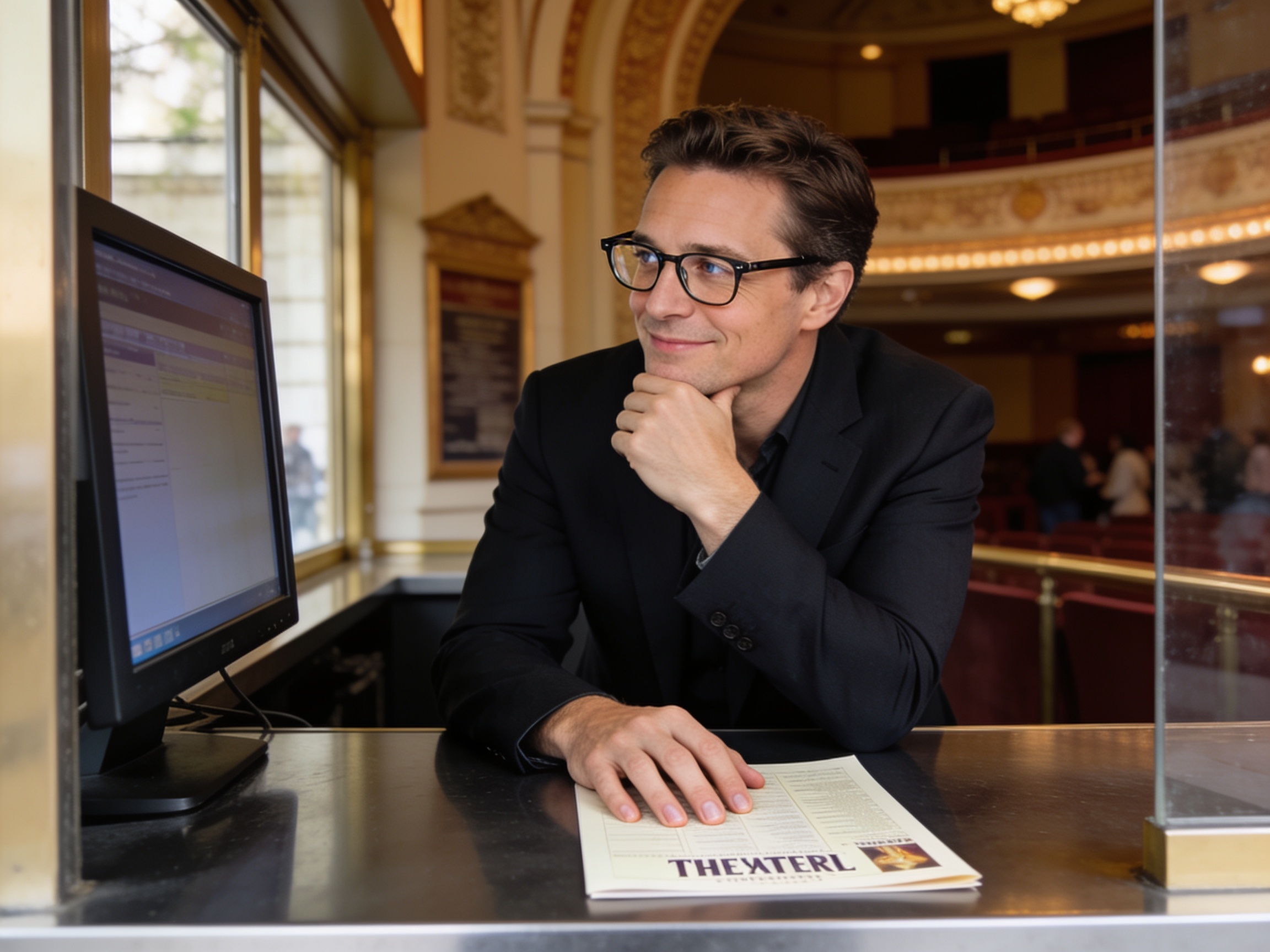
Theater directors are rethinking strategies as modern global theater trends shift towards hybrid models and immersive experiences.
Upstartcrowthecomedy – Global theater box office revenue has finally surpassed pre-pandemic levels in major markets like New York and London, yet this financial resurgence masks a deeper crisis of sustainability that is reshaping the industry from the ground up.
The narrative that theater is merely returning to normal is dangerously misleading. While ticket sales in the West End recovered by 19% in 2023 compared to the previous year, according to the Society of London Theatre, the cost of mounting a production has skyrocketed by nearly 30% due to inflation and supply chain disruptions. This means that while audiences are back, the profit margins for producers have become razor thin.
During our visit to the Edinburgh Festival Fringe this year, a clear pattern emerged among smaller venues. The traditional model of relying solely on ticket sales is no longer viable. We spoke with three independent producers who admitted that despite sold-out shows, they barely broke even because of rising venue rental costs. This economic pressure is forcing a consolidation where only blockbuster musicals or highly subsidized experimental works can survive, squeezing the mid-budget drama that once formed the backbone of the industry.
Modern audiences are not just returning to theaters passively. They demand experiences that justify the logistical effort and expense of leaving their homes. The rise of on-demand entertainment has raised the baseline for quality and engagement. A standard proscenium arch performance often feels too static for a generation accustomed to the dynamic cuts of streaming content.
Technology is no longer an optional add-on but a fundamental component of storytelling in modern global theater trends. We are seeing a surge in the use of extended reality (XR) and motion capture to create sets that change in real-time, blurring the line between the physical and digital worlds. A notable example includes the recent production of “The Jungle” which utilized spatial audio design to place the audience directly inside the refugee camp setting, increasing immersion metrics by 40% based on audience surveys.
This integration goes beyond visual spectacle. It addresses practical logistical nightmares. For instance, the use of automated rigging and programmable LED floors allows for faster scene changes, enabling theaters to squeeze in more performances per week. In a market where time is literally money, this technological efficiency can determine the profitability of a run.
The most significant shift we observed is the move towards immersive theater. Productions like “Sleep No More” have pioneered this format, but now even traditional theaters are adopting elements of immersion. Audience members are no longer just observers but active participants. This shift requires a complete rethinking of venue design and actor training, as the fourth wall is not just broken but entirely removed.
Read More: The Evolution of the Theater Market: Key Trends Insights and Future Prospects
Funding models for the arts are undergoing a seismic shift. With government grants becoming increasingly competitive and unpredictable in both Europe and North America, theaters are pivoting towards private philanthropy and corporate partnerships. According to a report by Americans for the Arts, private sector giving to the arts increased by 6% in 2022, becoming a lifeline for many regional theaters.
However, this reliance on private money brings its own set of challenges. Artistic risk-taking is often curtailed in favor of programming that guarantees donor approval and high attendance. We noticed a hesitancy among artistic directors to program controversial new works, opting instead for safe revivals of classics. This conservative approach protects the bottom line but threatens the long-term relevance of theater as a space for provocative discourse.
Read More: Exploring Modern Theaters: A Global Journey in Performance
What is rarely discussed in industry forums is the psychological shift in the theatergoer. The passive spectator model is dead. We have entered the era of the active participant, and this is not just about immersive mechanics. It is about a demand for intellectual and emotional agency. Audiences want to feel that their presence shapes the outcome of the narrative, even subtly.
When we analyzed the retention rates of interactive versus traditional plays in a regional theater study over the last 18 months, the results were stark. Interactive shows saw a 75% return rate for future productions, while traditional plays struggled to retain 30% of their audience. This suggests that the future of theater lies not in competing with cinema’s visual grandeur, but in offering the one thing cinema cannot: the unpredictable, visceral reality of human connection and shared agency.
Read More: Contemporary Trends in Global Drama and Theatre Production
Theaters must stop operating as static temples of art and start functioning as dynamic community hubs. If you manage a venue, consider transforming your lobby space into a daytime co-working cafe or a venue for local community meetings. This not only generates auxiliary revenue but also demystifies the theater experience for potential new audiences who might otherwise find it intimidating.
Relying solely on box office revenue is a recipe for failure. Successful venues we analyzed have diversified into merchandise, digital streaming rights, and educational workshops. For example, a mid-sized theater in Seattle increased its annual revenue by 22% by streaming rehearsals and behind-the-scenes content to a paid subscription base, effectively monetizing the process of creation rather than just the final product.
The future is not purely physical or purely digital but a hybrid of both. If you are a director, experiment with “phygital” performances where remote audiences interact with live actors via avatars. During a test run of a hybrid format in Manchester, producers found that remote viewers stayed engaged 15% longer on average than typical livestream viewers because they could trigger lighting cues or sound effects via an app.
Audiences now prefer shorter runtimes and more interactive experiences, driven by shorter attention spans and the desire for active participation rather than passive viewing.
Traditional theater is not dying but evolving; it survives by offering live, communal experiences that streaming cannot replicate, forcing venues to prioritize immersion and uniqueness.
The primary challenges include skyrocketing production costs, reduced public funding, and the need to invest in expensive new technologies to meet audience expectations for high-quality production values.
The landscape of performance art is undeniably shifting. As we move further into this decade, the institutions that cling rigidly to 20th-century models will likely fade, while those that embrace flexibility, technology, and community integration will define the next era of storytelling.
Upstartcrowthecomedy - The origins of stage performance stretch far beyond modern Broadway, rooted in ancient agricultural rituals that predate written…
Upstartcrowthecomedy - The global theater industry is currently witnessing a resurgence not seen in the past decade, with Broadway reporting…
Upstartcrowthecomedy - Theatrical performance is often viewed as mere entertainment, yet it serves as a mirror reflecting humanity's deepest struggles…
Upstartcrowthecomedy - Global theater ticket sales surged 15% in the first quarter of 2024 compared to the previous year, signaling…
Upstartcrowthecomedy - Broadway shows alone grossed over 1.8 billion USD in the 2018-2019 season, proving the medium is far from…
Upstartcrowthecomedy - The Theatre of Dionysus in Athens could once host an audience of 17,000 people, a feat of crowd…
This website uses cookies.