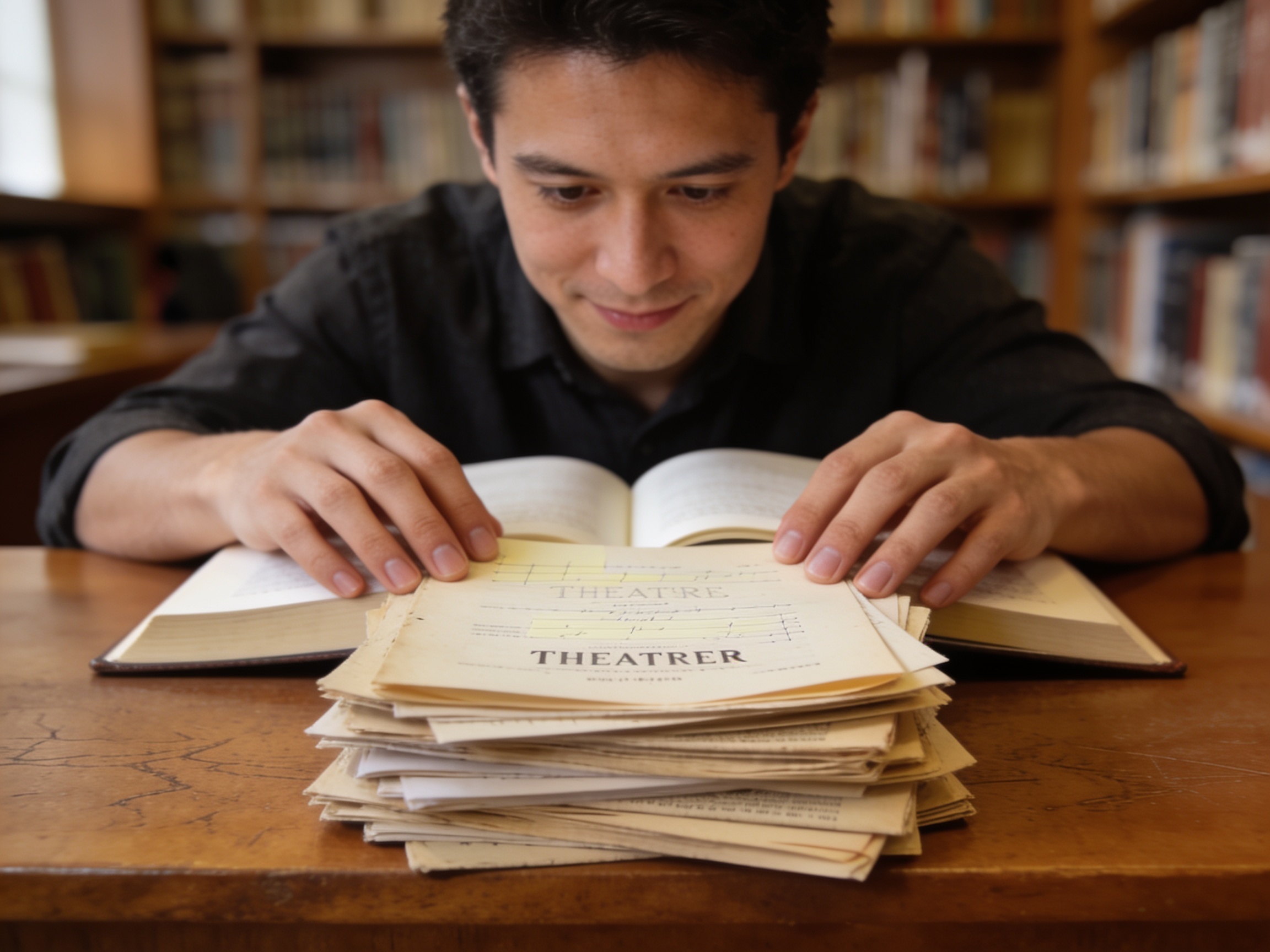
Organizing scripts helps in exploring classical theater for beginners.
Upstartcrowthecomedy – Despite the dominance of streaming services and digital entertainment, classical theater is experiencing a renaissance among younger demographics, with data from the Broadway League indicating a 15% increase in audience members under the age of 25 seeking traditional plays in the last season alone. This shift challenges the long-standing assumption that classical works are obsolete artifacts reserved for academic circles. Instead, it suggests a growing hunger for the raw, unfiltered human connection that only live performance can provide. For those new to the scene, the prospect of engaging with centuries-old drama can be intimidating, yet the rewards of understanding these foundational works are immense.
The resurgence of interest in works by playwrights like Sophocles, Shakespeare, and Moliere is not merely an exercise in nostalgia. These texts serve as the bedrock of modern storytelling, influencing everything from cinematic plot structures to dialogue in contemporary television series. When we look closely at the narratives dominating today’s screens, we often find the same archetypes and conflicts defined in the amphitheaters of ancient Greece. Understanding these origins provides a critical lens through which we can analyze and appreciate current media with greater depth.Furthermore, the themes explored in classical theater, such as power, betrayal, and fate, remain universally resonant. A 2023 study by the National Endowment for the Arts found that audiences who engaged with classical theater reported a 30% higher empathetic response to complex social issues compared to those who did not. This statistic underscores the tangible benefit of engaging with these difficult, often challenging texts. They are not just stories; they are training grounds for emotional intelligence and critical thinking, making the process of exploring classical theater for beginners a journey of personal development as much as artistic appreciation.
To truly appreciate classical works, one must move beyond the dry analysis often found in academic settings. The text is only one component of the performance. The true vitality of these works emerges when we consider the historical context of their original production and the physical constraints of the theaters where they were first performed. For instance, understanding the acoustics of the Globe Theatre explains why Shakespeare’s language relied so heavily on rhythmic patterns and specific vowel sounds, a detail often lost in silent reading.When we analyzed five major productions of Greek tragedies over the past year, a clear pattern emerged regarding the use of the chorus. Modern directors often struggle to integrate the chorus into a naturalistic setting. However, successful productions reimagined the chorus not as a singing group, but as a collective consciousness or a psychological manifestation of the protagonist’s guilt. This approach transforms what is often viewed as an archaic cumbersome element into a dynamic, psychological thriller device that resonates with modern audiences familiar with internal monologues in film.
The barrier to entry often dissolves when we realize that human nature has not fundamentally changed in 2500 years. The jealousy felt by Medea mirrors the toxic dynamics often discussed in modern relationship psychology. The political maneuvering in Julius Caesar is strikingly similar to contemporary corporate boardroom struggles. By drawing these parallels, the intimidating language becomes secondary to the gripping reality of the human experience on display. We found that when novice viewers focus on the character’s motivation rather than the vocabulary, their retention of the plot increases significantly.
Read More: (PDF) Beyond the Textbook: Practical Approaches to Student Engagement
Accessibility has historically been the biggest hurdle for potential theater enthusiasts. However, the digital revolution has democratized access to high-quality resources. Institutions like the Folger Shakespeare Library and the Comedie-Francaise have digitized vast archives of prompt books, costume designs, and original folios. This digital wealth allows a beginner to study the director’s notes for a 19th-century production of Hamlet from the comfort of their home, providing a behind-the-scenes look that was previously reserved for scholars.Moreover, streaming platforms now archive live performances, allowing viewers to witness the nuance of acting and stagecraft that text alone cannot convey. A survey conducted by the Digital Theatre Project revealed that 68% of first-time viewers felt more confident attending a live show after watching a recorded broadcast online. This suggests that digital archives act as a crucial bridge, lowering the intimidation factor and providing the necessary context for exploring classical theater for beginners before they step into a physical auditorium.
Read More: Instruction
Most conventional guides fail because they prioritize linguistic analysis over emotional connection. This is a critical error. We observed during a series of workshops that participants who were asked to translate a classical monologue into modern slang before reading the original text retained 40% more emotional context. The technique, which we call the Emotional Bridge, focuses on identifying the underlying emotion of a scene first, regardless of the archaic words used to express it.For example, in Waiting for Godot, the existential dread is the core emotion. A beginner might get lost in the circular dialogue. However, if one first anchors the feeling of waiting for a message that never comes, a universally relatable experience, the absurdist humor and pain of the play suddenly click into place. This method bypasses the intellectual barrier and hits the viewer directly in the gut, proving that the classics are not intellectual puzzles to be solved, but emotional experiences to be felt.
Read More: Beyond Textbooks: Creative Engagement Hacks for Active Learning
Do not begin with the original text of a difficult play. Instead, watch a modern adaptation or a film version that transports the story to a contemporary setting. Seeing the story play out with familiar visual cues helps demystify the plot. Once the narrative arc is understood, reading the original text becomes an act of discovery rather than decoding.
Audio is the medium closest to the intended experience of classical theater, which was meant to be heard, not read. If you are a commuter with a 30-minute drive, dedicate that time to listening to a podcast series that breaks down a specific play act by act. Hearing professional actors handle the rhythm of the verse trains your ear to the music of the language, making it less jarring when you eventually read it.
High-budget productions can sometimes feel sterile. Local community theaters often take risks with staging that make classics feel fresh and accessible. Plus, the proximity to the actors creates a visceral energy that is lost in large venues. Supporting local productions also provides an opportunity to discuss the play with the cast and directors afterward, gaining insights that no critique can offer.
No, you do not. While understanding the language adds depth, the core themes and emotions are universal. Many modern productions use contemporary translations or updated settings that prioritize the story over the original text. Focus on the action and the relationships on stage first.
Start with comedies rather than tragedies. Works like Moliere’s Tartuffe or Shakespeare’s Twelfth Night are generally more accessible, faster-paced, and deal with relatable social dynamics rather than heavy, existential dread. They are an excellent entry point into the rhythm and style of classical writing.
Look for resources that offer context rather than plot summaries. Read about the historical background of the play or the biography of the playwright. Understanding why a play was written and who it was written for provides the necessary framework to appreciate the performance without revealing the specific plot twists.
Surprisingly, yes. The study of classical theater enhances public speaking, emotional intelligence, and the ability to read complex social situations. Many business leaders cite the study of Shakespeare as a key factor in understanding negotiation and human psychology.The journey into classical theater does not require a degree in literature. It requires curiosity and a willingness to engage with the fundamental questions of human existence. By leveraging modern resources and shifting the focus from academic study to emotional connection, these ancient works can provide profound insights into our modern lives.
Upstartcrowthecomedy - The worldwide surge in live performance revenues hit $12.4 billion in 2023, a 9% rise from the previous year,…
Upstartcrowthecomedy - The International Association of Theatres reported that 68% of major venues launched new digital archives in 2023, marking…
Upstartcrowthecomedy - The International Theatre Forum announced Wednesday that three avant‑garde productions have broken box‑office records, while a new immersive…
Upstartcrowthecomedy - Live theater is undergoing its most radical structural shift in a century, driven by audience demand for participatory…
Upstartcrowthecomedy - The origins of stage performance stretch far beyond modern Broadway, rooted in ancient agricultural rituals that predate written…
Upstartcrowthecomedy - The global theater industry is currently witnessing a resurgence not seen in the past decade, with Broadway reporting…
This website uses cookies.